
Isaac changelog
Speak Your Mind: Real-Time Voice Transcription Arrives in Isaac Editor

We're excited to announce a feature many of you have been asking for: real-time voice transcription directly within the Isaac Editor! We understand that inspiration doesn't always strike when your hands are on the keyboard, and sometimes the fastest way to get your thoughts down is simply to speak them aloud.
From Voice to Text, Instantly
Starting today, you'll find a new microphone icon nestled in your editor's toolbar. Clicking this icon leverages your browser's built-in audio capabilities (MediaRecorder API) to capture your voice securely. This audio is then processed in real-time by an advanced AI transcription model converting your speech into text with remarkable accuracy.
The transcribed text appears instantly right where your cursor is, seamlessly integrating into your document flow. Whether you're dictating quick notes, brainstorming ideas, capturing quotes during a virtual meeting, or even drafting entire sections hands-free, this new feature is designed to make your writing process more fluid and efficient.
Why Voice?
Integrating voice transcription aims to:
Reduce Friction: Bridge the gap between thought and written text.
Increase Speed: Capture ideas as quickly as you can speak them.
Enhance Accessibility: Offer alternative input methods for drafting and note-taking.
Boost Productivity: Allow for multitasking and hands-free content creation.
The Future is Voice-Native
This is just the first step in our journey to make the Isaac Editor a more voice-native experience. We believe voice interaction has a significant role to play in the future of writing and research workflows. We're actively exploring further enhancements and integrations to make interacting with Isaac via voice even more powerful and intuitive.
Give it a Try!
Find Sources Feature Update
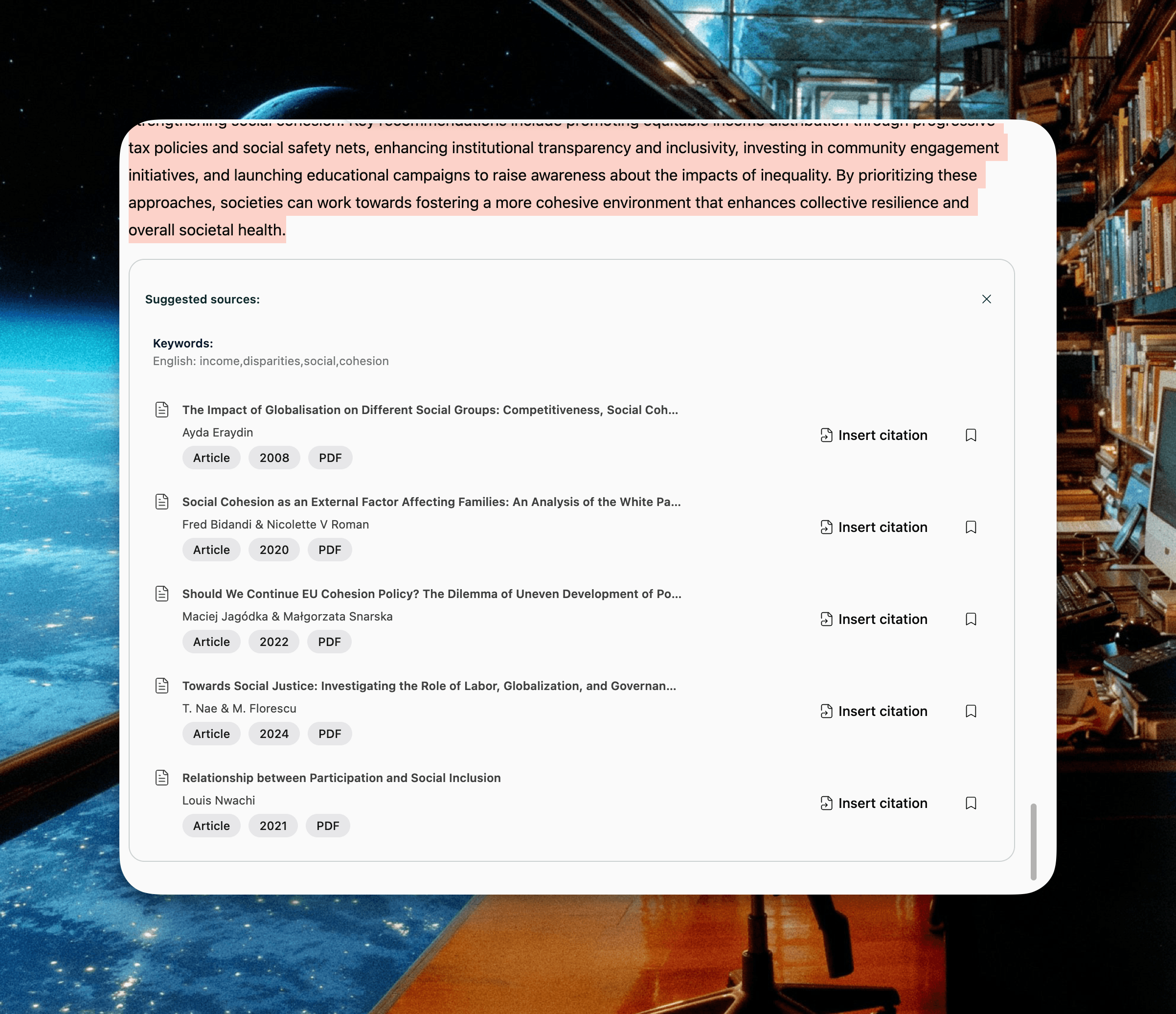
We've implemented a comprehensive upgrade to the "Find Sources" feature:
Enhanced query processing: The system now extracts keywords from user-provided text using NLP techniques before querying our database of academic papers.
Multi-stage relevance filtering:
Initial results generated from keyword matching against our paper repository
Results refined using a machine learning model trained on established relevance signals
Results ranked by citation count to prioritize influential papers
Final ranking determined through semantic vector search comparing user text against paper abstracts for contextual relevance
Performance optimization: The complete search pipeline executes in seconds, delivering results in real-time.
Future development: We're exploring applications of these algorithms in automated cross-referencing and validation systems.
Enhanced Citation Management System & New Export Formats
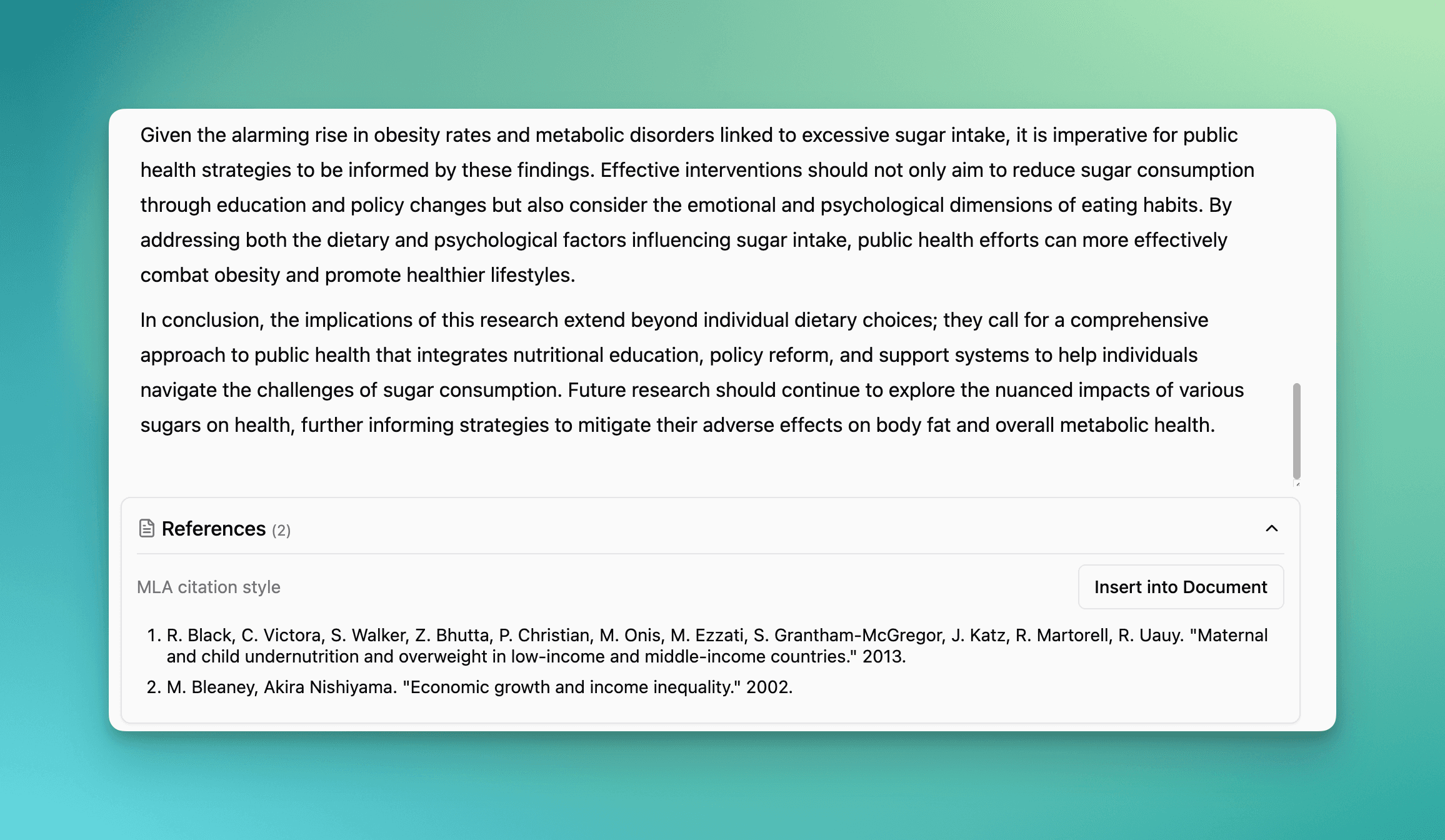
We're pleased to announce a comprehensive update to the citation management capabilities in Isaac Editor. This release introduces several key improvements designed to streamline the research workflow:
New Features
Editor References Panel: Real-time tracking of citations within your document
Streamlined Reference Insertion: Add citations to your document with a single click
Intelligent Document Exports: References are automatically included in exported documents
Additional Export Formats: Support for HTML and Markdown exports
Vancouver Citation Style: Proper numeric ordering now supported
The new References panel provides a dedicated space for monitoring all citations in your document as you write, while its collapsible design maximizes available writing space.
Our enhanced citation manager works efficiently in the background to maintain properly formatted references regardless of document structure.
This update represents our most robust citation management implementation to date and is now available in Isaac Editor.
Pasting Markdown-formatted text
Added support for pasting markdown-formatted text
The editor now automatically converts markdown to rich text when pasting from external sources
Improvements
You can now paste formatted content directly from LLM chats like ChatGPT, Claude, or the integrated Isaac chat
Supports all common formatting including headings, lists, bold/italic text, code blocks, and more
Maintains your current cursor position when pasting content
Seamlessly transfer content from research conversations into your documents while preserving formatting
This update makes it easier to work with content from AI assistants and other sources, allowing you to integrate formatted text into your documents without losing styling.
In-Text Citation Enhancements
We've introduced a feature that has been long overdue. You can now add page numbers to your in-text citations which allows for proper referencing.
Also, to further improve worklow efficiency and enable flow, we've made it possible for you to access the source of any citation directly from the text. Now, when you click on a citation, it opens up the source in the References Panel.
Multiple Chat Sessions
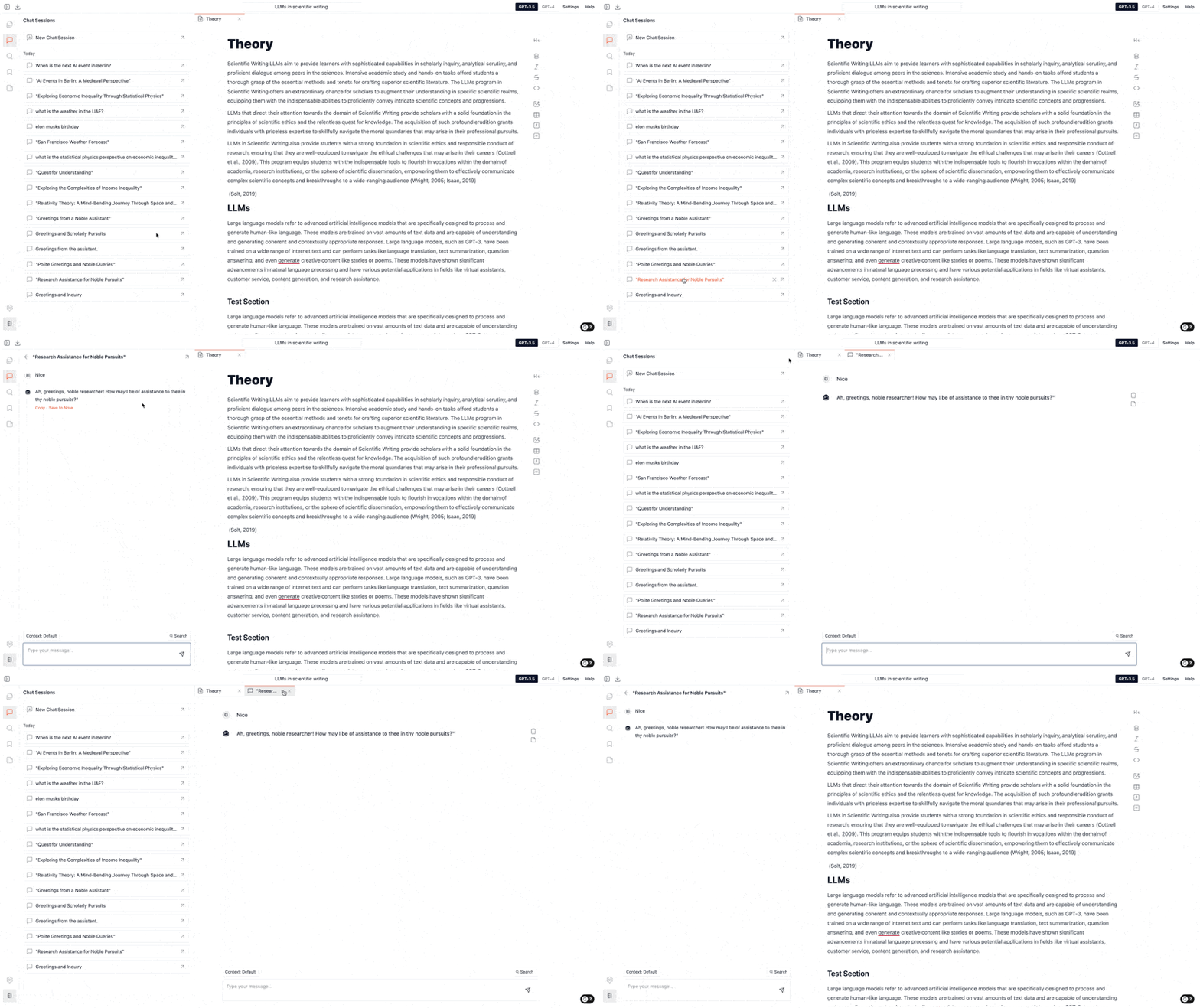
We have rolled out new features to enhance your chat session experience within each project. Now, you can create and manage multiple chat sessions. To streamline your workflow, we've introduced a tabbed interface that allows you to open and switch between different chat sessions in separate tabs. Each chat session has been upgraded to a full-screen experience, providing a more immersive and focused interaction environment. Additionally, we've optimized the performance to handle multiple chat sessions simultaneously, ensuring a smooth user experiencec.
Bug fixes
Fixed Mendeley integration bug
Fixed Zotero integration bug
More improvements & fixes
Improved the app's loading speed and general performance
Chat sessions are named automatically
Custom Instructions
You can now add preferences or requirements that you’d like Isaac to consider when generating its responses. Isaac will consider your custom instructions for every prompt and conversation going forward. Isaac will consider the instructions every time it responds, so you won’t have to repeat your preferences or information in every conversation.
Outline Generator & Inline Citations
Outline generator for new documents
When you create a new document, you can now have Isaac automatically generate an outline for you based on the title. This is one of a number of ideas we're experimenting with to speed up the writing with Isaac.
Enhanced Inline Citations
Enhanced Inline Citations: Type '#' in the editor to pull up saved references. Each reference displays a concise preview. Click to cite instantly. Scroll or type to search. If a reference is missing, launch a literature search without leaving the editor.